KINTEK’s prismatic cell equipment supports lithium-ion battery research, pilot-line development, process validation, and scalable cell manufacturing. The portfolio covers key stages of prismatic cell production, including automatic and semi-automatic Z-fold stacking machines, winding equipment, aluminum shell insertion and manual loading machines, vacuum electrolyte filling systems, vacuum steel-ball sealing machines, and automated testing, inspection, and sorting equipment. With solutions for electrode alignment, cell assembly, electrical testing, barcode traceability, and multi-grade classification, researchers and manufacturers can build a more consistent and controllable prismatic battery workflow.
Alternar categorias
Suporte Instantâneo
Escolha sua forma preferida de conectar com nossa equipe
-
Cotação Gratuita Preencha o formulário para preços detalhados
-
Enviar e-mail Suporte de consulta detalhada
Tempo de Resposta
Em 8 horas em dias úteis, 24 horas em feriados
Equipamento de Célula Prismática
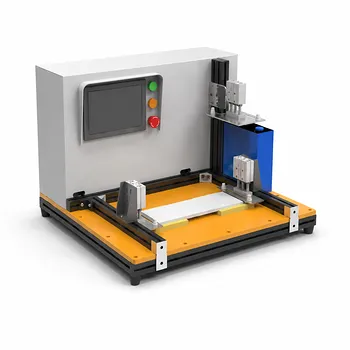
Equipamento Automático de Teste e Classificação de Baterias Prismáticas
Número do item: FX08
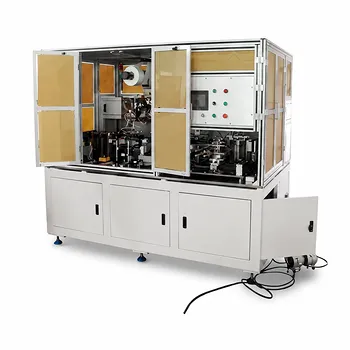
Máquina de Empilhamento Z-Fold Semiautomática para Baterias de Íon-Lítio Prismáticas
Número do item: FX05
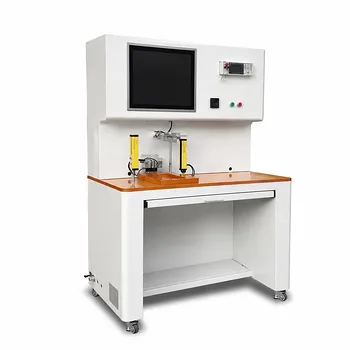
Máquina de Triagem OCV Multifuncional Manual para Células de Íon-Lítio do Tipo Pouch
Número do item: FX10
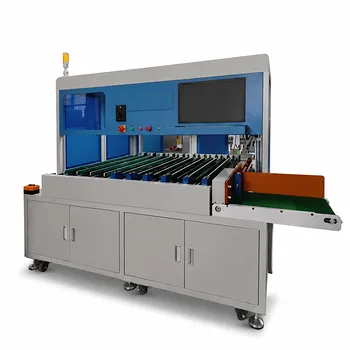
Máquina de Classificação Automática de Células Prismáticas com Invólucro de Alumínio
Número do item: FX11
Integrated Prismatic Cell Equipment for Consistent Battery Manufacturing
Prismatic lithium-ion cells are widely used in electric vehicles, energy storage systems, industrial power applications, and advanced battery research because their rigid rectangular enclosure provides efficient space utilization and supports high-capacity cell designs. However, producing reliable prismatic cells requires precise coordination across electrode preparation, separator handling, stacking or winding, shell insertion, electrolyte filling, sealing, electrical testing, and final classification. Small variations in alignment, tension, dosing, vacuum conditions, or cell matching can affect internal resistance, capacity consistency, cycle life, safety, and downstream pack performance.
KINTEK provides a practical range of prismatic cell equipment for laboratories, university research centers, pilot production lines, battery manufacturers, and process development teams. Our equipment portfolio is designed to help customers establish repeatable workflows from cell assembly to quality control. Depending on the production stage and required automation level, the product range includes semi-automatic and fully automatic Z-fold stacking machines, semi-automatic cylindrical and prismatic winding equipment, manual aluminum shell insertion systems, pilot-line electrolyte filling machines, vacuum steel-ball sealing machines, and automated testing, barcode inspection, and sorting systems.
Equipment for Prismatic Electrode Stacking and Winding
Stacking and winding determine the internal structure of a prismatic cell. These operations must maintain accurate electrode placement, stable separator handling, controlled web tension, and reliable transfer of the formed cell stack or jelly roll. If the separator shifts, electrode edges are not aligned, or tension changes during processing, the resulting cell may experience reduced active-area utilization, inconsistent electrical behavior, or increased manufacturing defects.
KINTEK’s semi-automatic Z-fold stacking machines are suitable for battery research, pilot production, and applications that require controlled operation with operator participation. The Z-fold process alternates separator layers and electrodes in a structured sequence, helping maintain consistent layer placement while supporting flexible development of different cell designs. Controlled diaphragm or separator handling helps reduce wrinkles and misalignment, while accurate electrode placement supports more uniform stack geometry. These systems are useful when development teams need repeatable stacking performance without committing to a fully automated production line.
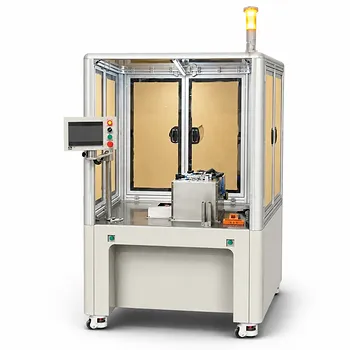
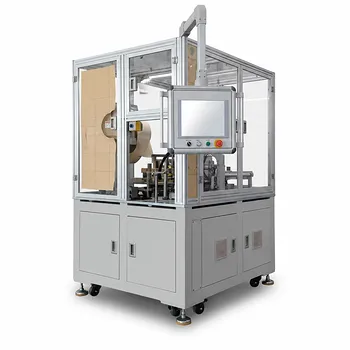
For higher-throughput and more automated workflows, the fully automatic Z-type stacking machine provides automated electrode and separator handling, controlled tension, dust-managed loading, tape application, and alignment performance of approximately ±0.3 mm according to the product specification. Automation can reduce manual handling, improve process repeatability, and support higher-yield cell-stack production. It is particularly suitable for manufacturing operations and development lines that require consistent stacking quality across repeated batches.
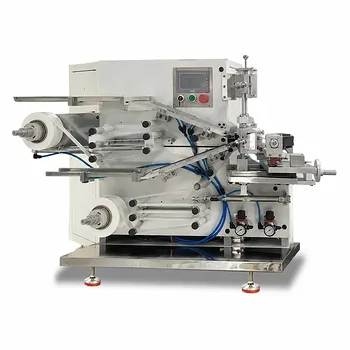
KINTEK also offers semi-automatic winding equipment for cylindrical and prismatic lithium-ion battery cells. Winding creates a layered electrode-separator structure by continuously combining the anode, cathode, and separator materials around a mandrel or forming element. Stable winding tension and accurate material alignment are essential for maintaining a uniform jelly roll and avoiding wrinkles, telescoping, or edge displacement. Adjustable mandrels, touchscreen settings, controlled tension, and continuous separator handling help users adapt the machine to different research and pilot-production requirements. This flexibility is valuable for laboratories developing multiple cell formats or evaluating different electrode and separator combinations.
Prismatic Cell Shell Loading and Enclosure Assembly
After the electrode stack or wound core has been prepared, it must be inserted into the prismatic aluminum or steel shell without damaging the electrodes, separator, tabs, or insulation components. Shell insertion is a critical transition between internal cell formation and enclosure assembly. Excessive force, poor positioning, or uncontrolled handling may deform the cell structure or introduce defects that are difficult to detect later in the process.
The prismatic battery manual loading and aluminum shell insertion machine supports adjustable positioning and protective shell handling for laboratory, pilot-line, and production environments. Manual-assisted operation allows technicians to manage development-stage materials, unusual cell dimensions, and low-volume production while benefiting from a more repeatable insertion process. This type of equipment is especially useful for research teams that frequently change cell designs and need practical flexibility rather than a fixed, high-volume configuration.
By improving positioning consistency during shell insertion, the equipment helps operators establish a more controlled assembly sequence. It can also reduce repetitive manual alignment work and support safer handling of the cell enclosure. For customers developing new prismatic formats, KINTEK can discuss the required shell dimensions, cell geometry, insertion approach, and workflow layout to help identify a suitable configuration.
Vacuum-Assisted Electrolyte Filling for Pilot Production
Electrolyte filling must deliver the required quantity of electrolyte into the cell while limiting air entrapment and maintaining repeatable dosing. Inadequate wetting or inconsistent electrolyte volume can influence ionic transport, formation behavior, capacity, internal resistance, and long-term cell performance. For this reason, filling equipment must be matched to the cell format, electrolyte characteristics, target volume, production rate, and required process control.
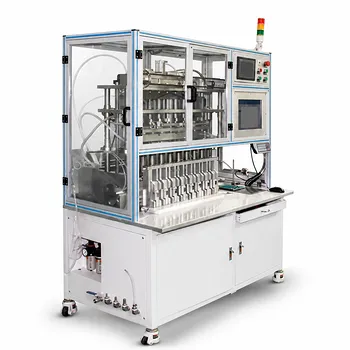
KINTEK’s pilot-line automatic electrolyte filling machine for prismatic power batteries uses vacuum-assisted filling and supports a 12-piece fixture arrangement. The vacuum process helps remove air from the cell and assists electrolyte penetration into the internal electrode-separator structure. Precise dosing and repeatable fixture handling support more consistent processing from cell to cell, while the stated throughput can reach up to 1 PPM under appropriate operating conditions.
This equipment is intended for demanding laboratory and pilot-line environments where process repeatability is important but production volumes may not yet justify a large-scale manufacturing system. It can help battery developers evaluate electrolyte formulations, optimize filling parameters, and establish a stable pre-formation workflow. Before selection, customers should confirm cell dimensions, electrolyte properties, target fill volume, vacuum requirements, fixture design, and safety provisions with the KINTEK technical team.
Vacuum Steel-Ball Sealing for Aluminum and Steel Shell Cells
Sealing closes the cell enclosure and protects the internal materials from environmental exposure. For aluminum and steel shell lithium batteries, vacuum steel-ball sealing provides a controlled method for closing the designated sealing opening while managing the vacuum condition and positioning accuracy. A reliable seal is essential for maintaining cell integrity during subsequent formation, aging, testing, and use.
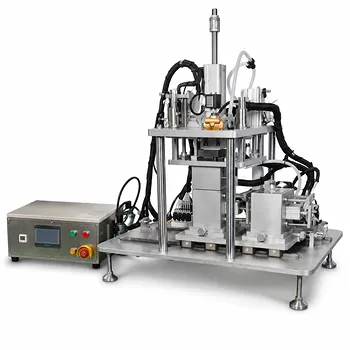
KINTEK’s aluminum steel shell lithium battery vacuum steel-ball sealing machine features a dual-chamber structure, adjustable vacuum timing, and positioning accuracy of approximately ±0.1 mm according to the product specification. The equipment can achieve an output of approximately 40–100 units per hour, depending on operating conditions, cell design, and process settings. The dual-chamber configuration can support a more organized sequence for cell placement and vacuum sealing, while adjustable timing allows users to adapt the process to different development requirements.
For research and pilot production teams, this equipment offers a practical way to move from manual sealing trials toward a more stable and repeatable enclosure-closing operation. Proper parameter development remains important, including vacuum level, vacuum duration, ball placement, sealing force, shell condition, and cell format. KINTEK can help customers review these variables when planning a system for a new prismatic cell design.
Automated OCV, Internal Resistance Testing, and Cell Sorting
Electrical testing and cell matching are essential for identifying abnormal cells and creating more consistent battery modules and packs. Open circuit voltage, or OCV, provides an initial indication of cell electrical condition, while AC internal resistance helps evaluate resistance differences that may influence current delivery, heat generation, efficiency, and pack balancing. When these measurements are combined with barcode identification, database records, and automated classification, manufacturers can improve traceability and make more consistent pairing decisions.
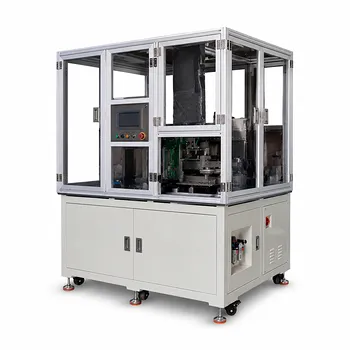
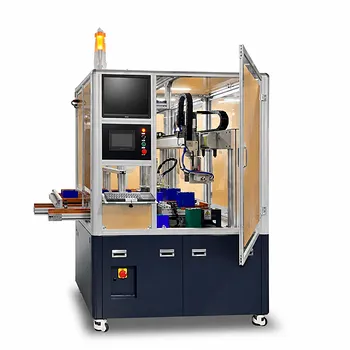
KINTEK’s prismatic battery automatic testing and sorting equipment measures open circuit voltage and AC internal resistance, automatically pairs cells into up to eight grades, and supports traceable database management. With a processing capacity of approximately 600 cells per hour, it is designed for operations that need repeatable quality decisions and efficient cell grouping. Automatic testing helps reduce operator-dependent judgment, while grading allows manufacturers to separate cells according to defined electrical criteria before pack assembly.
The prismatic battery barcode scanning inspection and eight-bin sorting machine combines barcode scanning, OCV and internal resistance testing, database upload, MES connectivity, and automated classification. This configuration is suitable for production lines that require a direct link between physical cell identity and test results. By connecting the barcode with inspection data, users can improve production records, simplify quality investigations, and support more structured process control.
For aluminum shell cell production, the prismatic aluminum shell cell automatic sorting machine provides barcode traceability, precision voltage and internal resistance testing, and ten-grade classification. PLC-based handling, alarms, and local production records support dependable operation and clearer management of testing results. Multi-grade sorting can help manufacturers define tighter matching rules for different applications, from laboratory evaluation to battery pack production.
KINTEK also supplies a manual multifunctional OCV sorting machine for pouch lithium-ion cells. Although it is intended for pouch cells rather than rigid prismatic enclosures, it can be useful for battery laboratories and development teams that work with multiple cell formats. The machine combines voltage and internal resistance testing, data binding, software grading, voice notification, and flexible cell compatibility. It provides a manual and adaptable approach for research environments where cell volumes are moderate and operators need direct control over testing and classification.
Why Choose KINTEK for Prismatic Cell Processing?
Prismatic cell production involves multiple interconnected operations, and selecting isolated machines without considering the complete workflow can create compatibility, transfer, or data-management challenges. KINTEK’s experience across battery fabrication and advanced materials research allows us to evaluate equipment needs from a process perspective. We can help customers consider the relationship between stacking or winding, shell insertion, electrolyte filling, sealing, electrical testing, sorting, and future scale-up requirements.
Our equipment supports different levels of automation. Manual-assisted systems can be appropriate for research laboratories, small-batch development, and frequently changing cell formats. Semi-automatic machines can improve repeatability while preserving operator flexibility, making them suitable for pilot lines and process optimization. Fully automatic stacking, testing, inspection, and sorting systems are better suited to operations that prioritize throughput, data traceability, and consistent production handling. This range allows customers to select equipment according to current needs while planning for future development.
Key advantages of the category include:
- Broad process coverage: Equipment is available for stacking, winding, shell insertion, electrolyte filling, vacuum sealing, electrical testing, inspection, and cell sorting.
- Flexible automation levels: Manual, semi-automatic, pilot-line, and fully automatic solutions support different laboratory and manufacturing environments.
- Improved process repeatability: Controlled alignment, tension, dosing, vacuum timing, positioning, and automated handling help reduce variation between cells.
- Electrical quality classification: OCV and AC internal resistance testing support more consistent grouping and pairing of cells.
- Traceable production data: Barcode scanning, database management, local production records, and MES connectivity support structured quality control.
- Support for development and scale-up: Equipment can be used for battery research, pilot production, process validation, and industrial manufacturing workflows.
- Adaptability to cell requirements: Fixture design, mandrels, cell dimensions, operating parameters, and automation features can be reviewed according to the application.
Customization and Technical Support
Every prismatic battery project has different requirements. Cell dimensions, electrode thickness, separator width, tab configuration, shell material, electrolyte formulation, target throughput, testing limits, automation architecture, and factory data systems can all affect equipment selection. A machine that performs well for one cell format may require different fixtures, tooling, recipes, or handling parameters for another.
KINTEK offers professional support for equipment planning and customization. Our team can discuss your cell format, production stage, expected capacity, target automation level, available floor space, operator workflow, testing criteria, and integration requirements. We can also help evaluate whether a manual, semi-automatic, or fully automatic solution is more appropriate for your project. Where necessary, equipment details such as fixtures, mandrels, loading mechanisms, sorting bins, database functions, alarms, and communication interfaces can be reviewed as part of the technical planning process.
If you are establishing a new prismatic cell laboratory, upgrading a pilot line, improving cell matching, or preparing for higher-volume production, contact KINTEK for a solution discussion. Share your battery format, process requirements, target output, and preferred automation level through our Contact Form. Our specialists will help you identify suitable equipment and develop a practical, scalable workflow for prismatic lithium-ion cell manufacturing.
SOLICITAR UM ORÇAMENTO
Nossa equipe profissional responderá a você em até um dia útil. Sinta-se à vontade para nos contatar!