KINTEK’s pouch cell assembly equipment supports the complete packaging and finishing workflow for lithium-ion, polymer, and prismatic pouch cells, from electrode stacking and aluminum-plastic film forming to tab processing, vacuum pre-sealing, final sealing, edge folding, hot pressing, trimming, and OCV/DCIR inspection. The range includes manual, pneumatic, servo, rotary, linear, semi-automatic, and integrated three-in-one systems, helping research teams, universities, pilot lines, and battery manufacturers select the right balance of flexibility, repeatability, throughput, and process control.
Alternar categorias
Suporte Instantâneo
Escolha sua forma preferida de conectar com nossa equipe
-
Cotação Gratuita Preencha o formulário para preços detalhados
-
Enviar e-mail Suporte de consulta detalhada
Tempo de Resposta
Em 8 horas em dias úteis, 24 horas em feriados
Equipamento de Montagem de Células tipo Bolsa
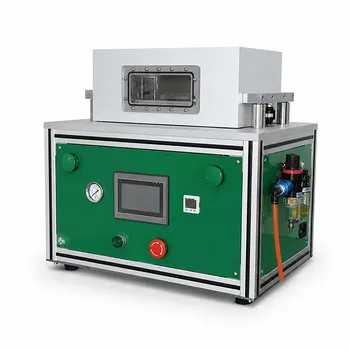
Máquina de Selagem Final a Vácuo Secundário para Células Pouch
Número do item: RB38
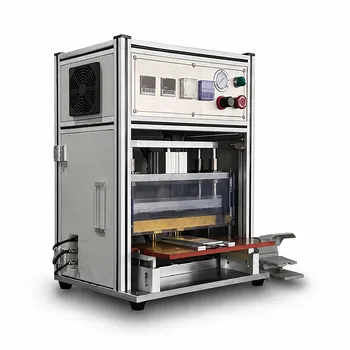
Máquina de Selagem de Cantos para Células Pouch
Número do item: RB28
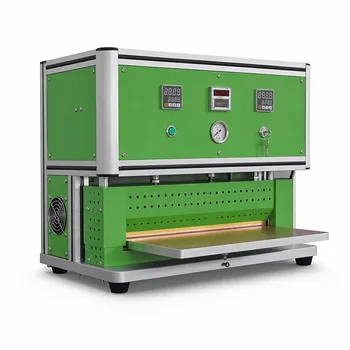
Máquina de Selagem de Topo e Lado para Células Pouch de 200mm
Número do item: RB23
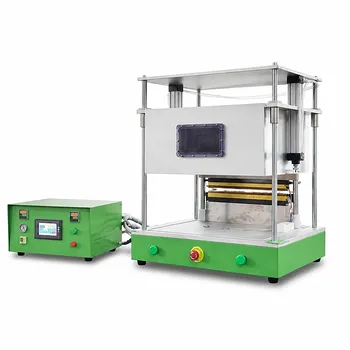
Máquina três em um de repouso, pré-selagem e selagem secundária
Número do item: RB29
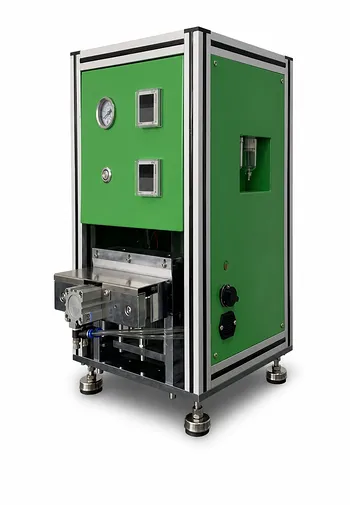
Máquina Pneumática de Dobragem de Bordas de Bateria de 200 mm para Uso Laboratorial
Número do item: RB08
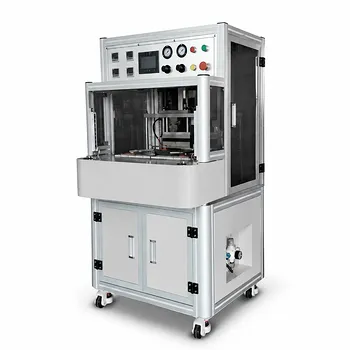
Máquina de Termosselagem de Topo e Lado para Células de Bolsa de 200mm
Número do item: RB20
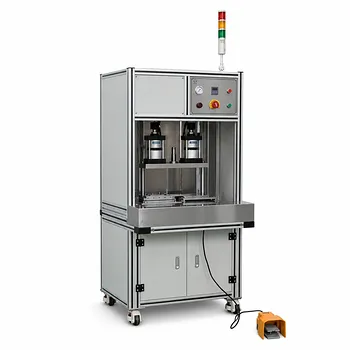
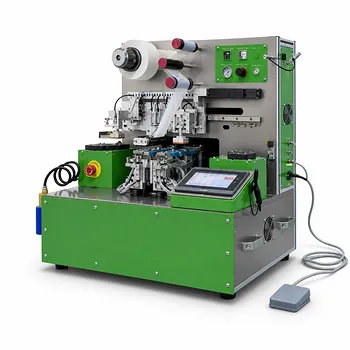
Máquina de Empilhamento Semiautomática em Z
Número do item: RB06
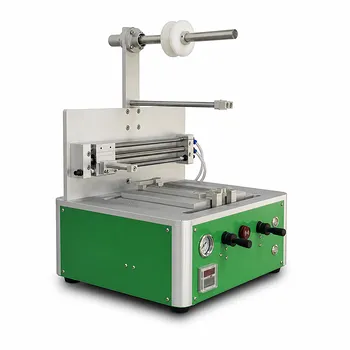
Máquina de Empilhamento de Eletrodos de Bateria Semiautomática Tipo Z
Número do item: RB03
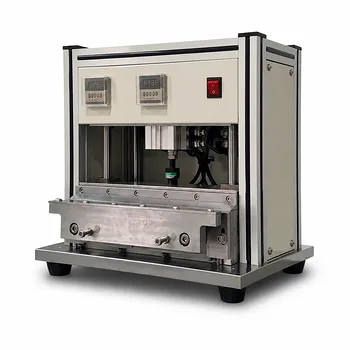
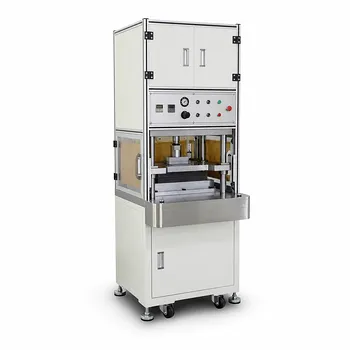
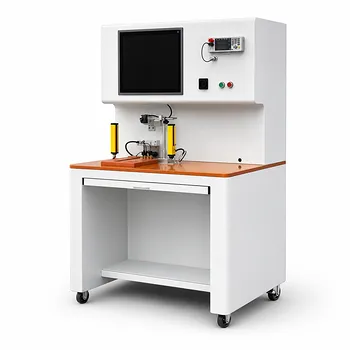
Máquina de Teste e Classificação Multifuncional Manual de OCV
Número do item: RB02
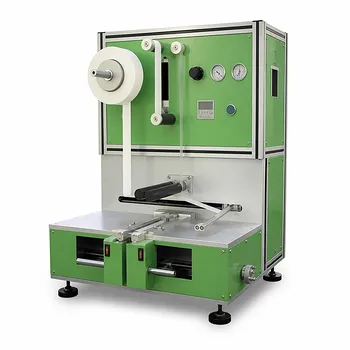
Máquina de Empilhamento Semiautomática Tipo Z para Baterias de Íon-Lítio
Número do item: RB05
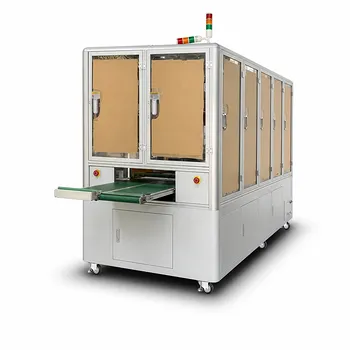
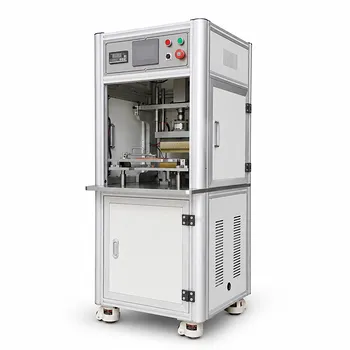
Máquina de Selagem Superior e Lateral de Baterias de Polímero Servoacionada
Número do item: RB21
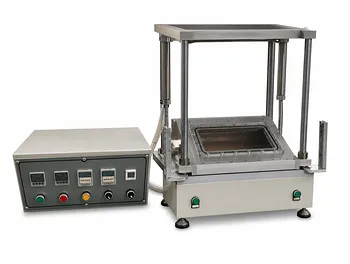
Máquina de Pré-selagem a Vácuo e Selagem de Topo
Número do item: RB22
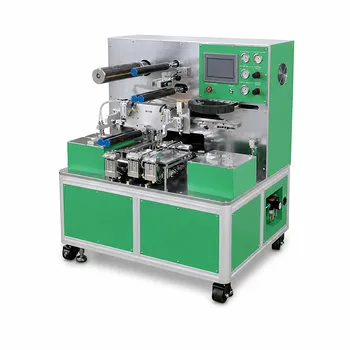
Máquina de Empilhamento Semiautomática para Baterias de Íon-Lítio
Número do item: RB04
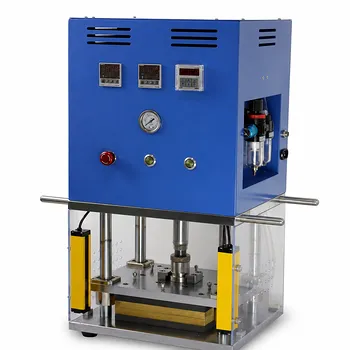
Máquina de Prensa a Quente e Conformação de Células de Bateria Manual
Número do item: RB07
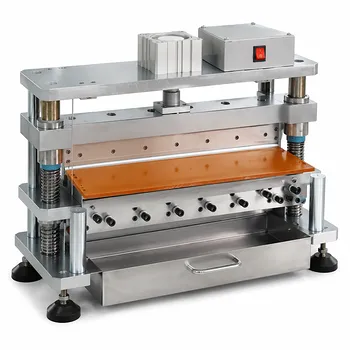
Máquina de Corte de Bordas para Eletrodos de Bateria Pneumática
Número do item: RB09
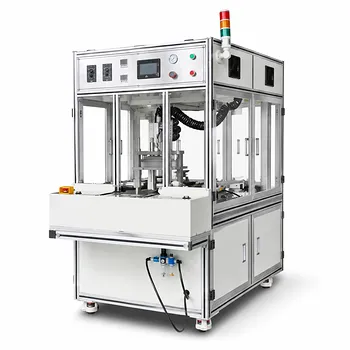
Máquina de Corte de Bordas, Dobra e Selagem Térmica para Células Pouch
Número do item: RB11
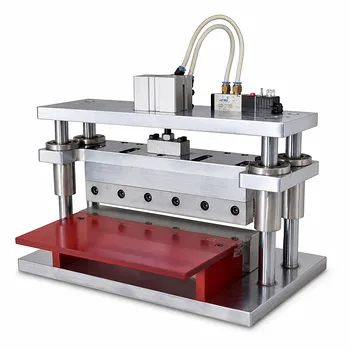
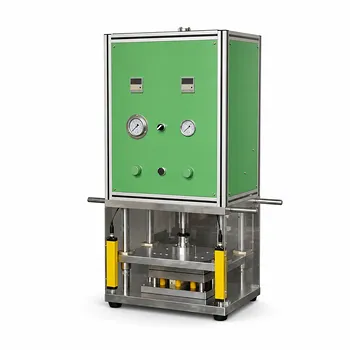
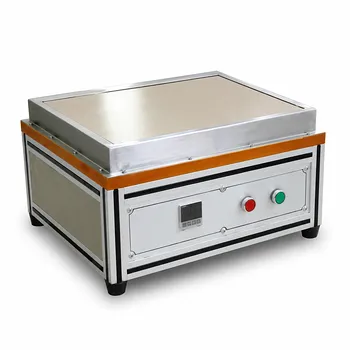
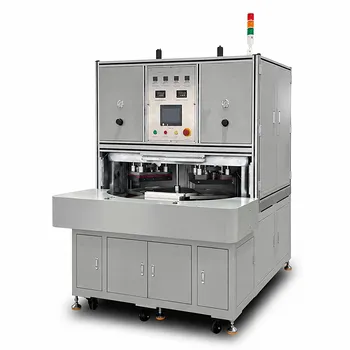
Prensa Rotativa a Quente e a Frio para Células de Bateria de Lítio tipo Pouch
Número do item: RB17
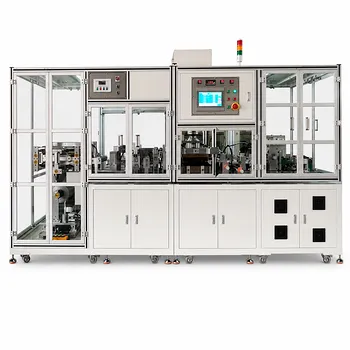
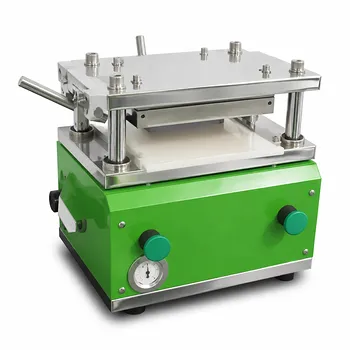
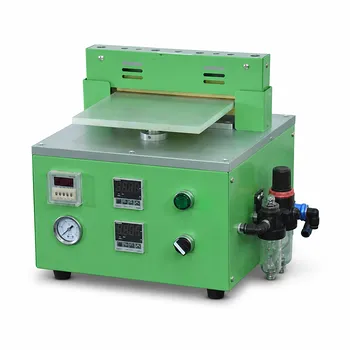
Máquina de Selagem Superior e Lateral para Embalagem de Baterias de Lítio tipo Pouch
Número do item: RB24
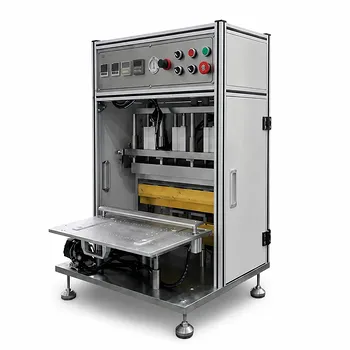
Máquina de Selagem Superior Simples para Baterias de Polímero
Número do item: RB25
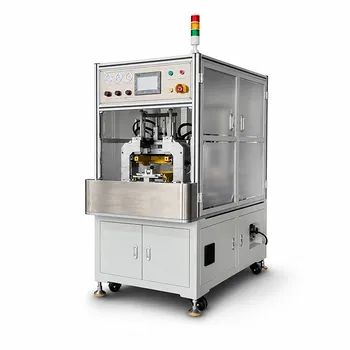
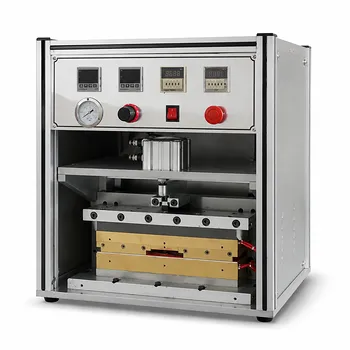
Máquina de Selagem de Topo Simples para Baterias de Polímero de 300mm
Número do item: RB27
Complete Pouch Cell Assembly Equipment for Controlled Battery Development
Pouch cell assembly is the stage where carefully prepared electrodes, separators, tabs, electrolyte, and packaging materials are converted into a functional cell. Small variations in alignment, film forming, sealing temperature, pressure, vacuum level, edge geometry, or handling can affect moisture resistance, internal reliability, dimensional consistency, and later electrochemical performance. KINTEK provides a broad equipment platform for pouch cell research, process development, small-batch production, and pilot-scale manufacturing, helping users establish repeatable procedures from electrode stacking through final inspection.
Our equipment portfolio is designed for lithium-ion batteries, polymer batteries, flexible pouch cells, and related advanced materials research. Depending on the application, customers can choose compact manual equipment for laboratory experimentation, pneumatic machines for repeatable operator-assisted processing, or semi-automatic and automated systems for higher throughput and improved process consistency. The equipment can also be configured around specific cell dimensions, film widths, tab layouts, sealing requirements, production volumes, and laboratory conditions.
A Complete Workflow from Electrode Stacking to Finished Cell
A reliable pouch cell assembly process begins with accurately aligned electrodes and separator material. KINTEK’s Z-type and semi-automatic stacking machines use guided separator movement, controlled separator tension, adjustable fixtures, pneumatic or foot-pedal operation, vacuum pickup, programmable layer counting, and digital or HMI-based control to support consistent electrode placement. These systems are suitable for research samples, prototype cells, and small-batch production where flexibility and repeatable alignment are essential. Different models can accommodate a range of electrode sizes and stacking configurations, allowing users to develop cell designs without committing immediately to a large industrial line.
After stacking, tab preparation and film preparation directly influence the quality of subsequent packaging. The battery cell tab cutting and flattening machine provides manual loading and unloading with pneumatic trimming, controlled flattening, automatic counting, foot-pedal operation, and guarded handling. It is suitable for preparing stacked cells with more uniform tabs before sealing or welding operations. Pneumatic electrode sheet trimming and edge-cutting machines provide controlled cutting of formed aluminum-plastic film or electrode sheet edges. Adjustable cutting width, durable high-speed steel blades, and operator-controlled activation help laboratories achieve cleaner, more repeatable edge processing.
For the pouch case itself, KINTEK offers manual, pneumatic, semi-automatic, and automatic aluminum-plastic film forming machines. These machines form the cell pocket to a controlled depth and shape before the electrodes and separator stack are inserted. Depending on the model, users can benefit from adjustable draw depth, pneumatic-hydraulic or pneumatic forming force, dual-button safety operation, light-curtain protection, wrinkle control, servo material feeding, preheating, web alignment, static removal, trimming, and separated material collection. Manual and pneumatic forming machines are particularly useful for flexible research environments and prototype development, while semi-automatic and continuous-roll systems support more stable pilot production and higher output.
Precision Film Forming for Reliable Pouch Geometry
Aluminum-plastic laminate film must be formed without excessive stretching, tearing, wrinkling, or uncontrolled deformation. If the pocket is too shallow, the stacked cell may be compressed or difficult to insert. If it is too deep or uneven, excess volume may affect the final cell dimensions and sealing process. KINTEK forming equipment is developed to give operators greater control over forming depth, pressure, speed, tooling, and material handling.
The manual aluminum plastic film forming machine supports adjustable draw depths from approximately 1 to 30 mm, pneumatic-hydraulic force, rapid forming cycles, dual-button control, and safety light-curtain protection. It is suited to laboratory packaging preparation and experimental cell formats. The pneumatic pouch shell forming machine provides controlled forming force and adjustable pocket depth for small-scale research and sample preparation. For larger or more repeatable operations, the semi-automatic polymer lithium battery forming machine offers stable deep-pocket forming, dimension control, wrinkle-managed polypropylene layers, safeguarded operation, and convenient tooling changes.
For continuous manufacturing requirements, the automatic polymer battery aluminum alloy composite film pouch case forming machine integrates web alignment, cleaning, static elimination, preheating, forming, trimming, cutting, and collection. Servo material feeding and tension control help maintain a more stable process across continuous rolls. This type of integrated design can reduce manual transfer steps, improve material utilization, and create a more consistent foundation for subsequent cell assembly.
KINTEK can also help users select or develop forming tools according to the required pouch dimensions, pocket depth, film structure, edge allowance, and changeover requirements. Tooling and fixture compatibility are important when a laboratory works with multiple cell formats, so our team can discuss the intended cell design before recommending a configuration.
Controlled Pre-Sealing, Top Sealing, and Side Sealing
Heat sealing creates the barrier that protects the cell interior from air and moisture while retaining electrolyte and maintaining the mechanical integrity of the pouch package. The sealing process depends on the combined effect of temperature, sealing pressure, dwell time, head parallelism, sealing width, film alignment, and, in many cases, vacuum conditions. KINTEK pouch cell sealing machines provide adjustable process parameters so users can optimize the seal for their aluminum-plastic laminate structure and cell format.
The top and side sealing range includes simple top sealing machines, top-side sealing machines, linear systems, servo polymer battery sealers, rotary top-side sealers, 200 mm wide models, 300 mm models, and integrated PLC-controlled edge processing systems. Copper heat-sealing heads provide efficient heat transfer and can be customized for different sealing lengths, widths, tab arrangements, and cell geometries. Adjustable temperature, pressure, stroke, and dwell time allow operators to establish a suitable process window rather than relying on a fixed setting.
The polymer battery simple top sealing machine includes guided fixture positioning, tab alignment, pneumatic compression, temperature alarm functions, adjustable sealing time, and customizable copper sealing heads. The 300 mm polymer battery top-side sealing machine combines foot-pedal pneumatic operation with adjustable timing, temperature monitoring, and a defined copper sealing edge. These compact systems are appropriate for laboratories that need dependable operation while retaining manual control over loading and unloading.
For higher repeatability, the servo polymer battery top and side sealing machine provides controlled fixture movement and adjustable sealing parameters in a single-station format. The linear top and side sealing machine uses servo fixture transfer and automated safety protection, with an output specification of up to approximately 4 PPM under suitable operating conditions. Rotary top-side sealing equipment supports repeatable processing through a multi-position arrangement, with independently adjustable temperature, time, pressure, and stroke control. These options help customers select a sealing architecture suited to throughput, operator involvement, floor space, and cell format variation.
Vacuum Processing for Improved Packaging Quality
Vacuum processing is important when the cell must be sealed after electrolyte filling, wetting, resting, or gas removal. Removing air and managing the internal condition of the pouch before final closure can help reduce trapped gas and support more consistent packaging. The exact vacuum level, holding time, temperature, and pressure should be established according to the electrolyte, separator, electrode chemistry, cell size, and process objective.
KINTEK’s vacuum pre-sealing and top-side sealing machines combine high-vacuum operation with adjustable sealing time and precise temperature control. They are designed for laboratory and pilot-line workflows where controlled removal of gas or air is required before the initial seal. The three-in-one resting, pre-sealing, and secondary-sealing machine integrates resting, electrolyte absorption support, controlled hot pressing, and repeatable pouch packaging functions into one coordinated platform. This arrangement can reduce transfers between separate machines and make it easier to maintain consistent treatment conditions during cell development.
The pouch cell secondary vacuum final sealing machine is intended for the final closure stage. It combines automatic piercing, adjustable heat-sealing pressure, precise temperature control, and a robust chamber structure. The piercing function can support controlled gas release before final sealing, while the vacuum chamber helps create a more controlled packaging environment. By adjusting temperature, pressure, and sealing conditions, users can optimize the final seal for different laminate materials and pouch formats.
Edge Folding, Flattening, Trimming, and Finishing
After sealing, the remaining film edges may need to be folded, flattened, trimmed, or heat-treated to achieve the required finished dimensions and appearance. Consistent edge processing is not only cosmetic; it can influence packaging thickness, handling, fixture compatibility, and the usable space around the active cell area.
KINTEK offers manual and pneumatic edge-folding equipment, including a 200 mm pneumatic battery edge folding machine and a 300 mm wide polymer battery manual edge folding machine. Adjustable folding width, configurable pressure, speed control, foot-pedal operation, and pneumatic actuation give users a practical way to process different pouch dimensions. The 300 mm manual model supports a folding width of approximately 2–6 mm and a folding length of up to 300 mm, making it useful for laboratory and pilot production work involving larger polymer pouch formats.
For final edge flattening, the pouch battery edge sealing and polymer battery hot edge flattening equipment uses a heated copper platen, adjustable temperature, and a defined sealing length. This process can help flatten folded edges and improve the consistency of the final pouch profile. The pouch cell edge cutting, folding, and heat-sealing forming machine combines trimming, folding, and heat sealing under PLC control, with touchscreen operation and flexible changeover. Integrating these steps can reduce manual handling and support more consistent production results.
The 400 mm aluminum-plastic film pouch top-side edge trimming machine provides adjustable trim widths of approximately 2.5–8 mm and stated precision of up to ±0.2 mm under appropriate operating conditions. High-speed steel blades and foot-pedal control support controlled removal of excess film after sealing. For customers working with wider laminate formats or higher finishing requirements, this type of pneumatic trimmer can improve edge uniformity and reduce time-consuming manual cutting.
Hot Pressing and Thickness Control
Pouch cells may require flattening, shaping, or thermal pressing after assembly. A controlled hot press can help reduce rebound, improve thickness uniformity, and support easier insertion into a casing, fixture, or test holder. The correct pressing force and temperature depend on the cell construction, electrolyte condition, separator properties, electrode stack, and desired outcome; excessive force or heat should be avoided.
The manual battery cell hot press flattening and shaping machine provides adjustable pressing force up to approximately 1 ton and heating up to 250°C. It is suitable for laboratory trials in which the operator needs direct control over pressure and temperature. For larger workflows, the rotary hot and cold press for pouch lithium battery cells supports three-station operation, adjustable pressing force up to approximately 5 tons, thermal forming, controlled dwell, platen alignment, and repeatable material handling. Hot and cold pressing can be selected according to the required forming or stabilization process, helping users evaluate how temperature affects thickness, packaging shape, and cell handling.
Inspection, Testing, Sorting, and Data Traceability
Assembly equipment is most valuable when it is connected to a meaningful quality-control process. KINTEK offers manual and automated OCV and DCIR testing systems for pouch and prismatic cells. The manual OCV multifunction test sorting machine combines voltage measurement, internal resistance grading, operator-guided handling, data binding, database storage, computer display, and configurable audible grade notifications. This is useful for research teams that need to connect measured electrical characteristics with sample identification and processing history.
For higher-throughput production, the pouch prismatic battery OCV/DCIR testing machine adds barcode scanning, voltage and resistance measurement, OK/NG sorting, data traceability, and server integration. Automated identification and result recording can reduce transcription errors and make it easier to compare cells across batches, process conditions, and experimental designs. Linking electrical inspection with assembly records can also support process improvement and more disciplined pilot-line operation.
Manual, Semi-Automatic, and Automated Solutions
KINTEK recognizes that battery laboratories and manufacturing teams have different priorities. A university research group may need a compact machine with fast format changeover and manual loading. A corporate R&D center may require improved repeatability, recipe control, and compatibility with glovebox workflows. A pilot production line may prioritize throughput, automated transfer, digital counting, barcode traceability, and reduced operator intervention. Our pouch cell assembly equipment can be selected and combined according to these requirements.
Manual machines generally provide the greatest flexibility and the lowest barrier to experimentation. Pneumatic systems add repeatable force and motion while keeping the operator involved. Semi-automatic machines improve alignment, counting, tension management, and cycle consistency without requiring a fully automated line. Servo, linear, rotary, and integrated systems are appropriate when the customer needs higher throughput, coordinated movement, and more defined process control.
A modular equipment strategy can also be beneficial. For example, a laboratory may begin with a manual film forming machine, Z-type stacking machine, vacuum pre-sealer, top-side sealer, edge folder, and manual OCV/DCIR tester. As production volume increases, selected stages can be upgraded to semi-automatic stacking, servo sealing, automatic case forming, integrated edge processing, rotary hot pressing, and automated inspection. This approach allows the equipment investment to develop alongside the cell design and process maturity.
Designed for Battery R&D and Advanced Materials Research
Pouch cell assembly often takes place alongside slurry preparation, electrode coating, calendaring, cutting, drying, electrolyte filling, formation, and electrochemical testing. KINTEK’s broader laboratory equipment portfolio covers many of these stages, including mixing, coating, precision pressing, heating, and cell testing. This enables customers to discuss the workflow as a complete system rather than selecting isolated machines without considering upstream and downstream compatibility.
Our equipment is also relevant to polymer battery research, flexible packaging studies, separator evaluation, electrode development, powder and materials research, ceramics-related processing, and academic experimentation where controlled forming, pressing, heating, or sealing is required. Robust construction, adjustable parameters, guarded operation, and compact laboratory-friendly designs support demanding research environments while allowing users to maintain hands-on control over experimental conditions.
Customization and Technical Support from KINTEK
Cell dimensions, pouch film widths, tab positions, sealing lengths, pocket depths, edge allowances, operating environments, and throughput targets vary significantly between projects. KINTEK can help evaluate these variables and recommend a suitable equipment combination. Customization may include sealing head geometry, fixture dimensions, forming molds, folding widths, pressure ranges, temperature ranges, control interfaces, cycle timing, barcode or database functions, safety features, and integration with other laboratory or pilot-line equipment.
Before selecting a machine, it is helpful to provide the target cell type, electrode dimensions, pouch material, film width, required pocket depth, sealing layout, expected daily quantity, available utilities, glovebox or dry-room requirements, and desired level of automation. Our technical team can then help define an appropriate configuration and identify the process parameters that should be validated during installation and commissioning.
Whether you are building your first pouch cell research line, improving the consistency of an existing laboratory process, or planning a pilot-scale battery assembly workflow, KINTEK offers practical equipment options and application-focused guidance. We combine laboratory equipment expertise with an understanding of the full cell fabrication sequence, helping you move from experimental samples toward repeatable, traceable, and scalable pouch cell production.
Have a specific pouch cell format or assembly challenge? Contact KINTEK to discuss your cell dimensions, film material, sealing process, automation requirements, and customization needs. Our specialists can help you select and configure the right pouch cell assembly equipment for your battery R&D or pilot production workflow.
SOLICITAR UM ORÇAMENTO
Nossa equipe profissional responderá a você em até um dia útil. Sinta-se à vontade para nos contatar!